

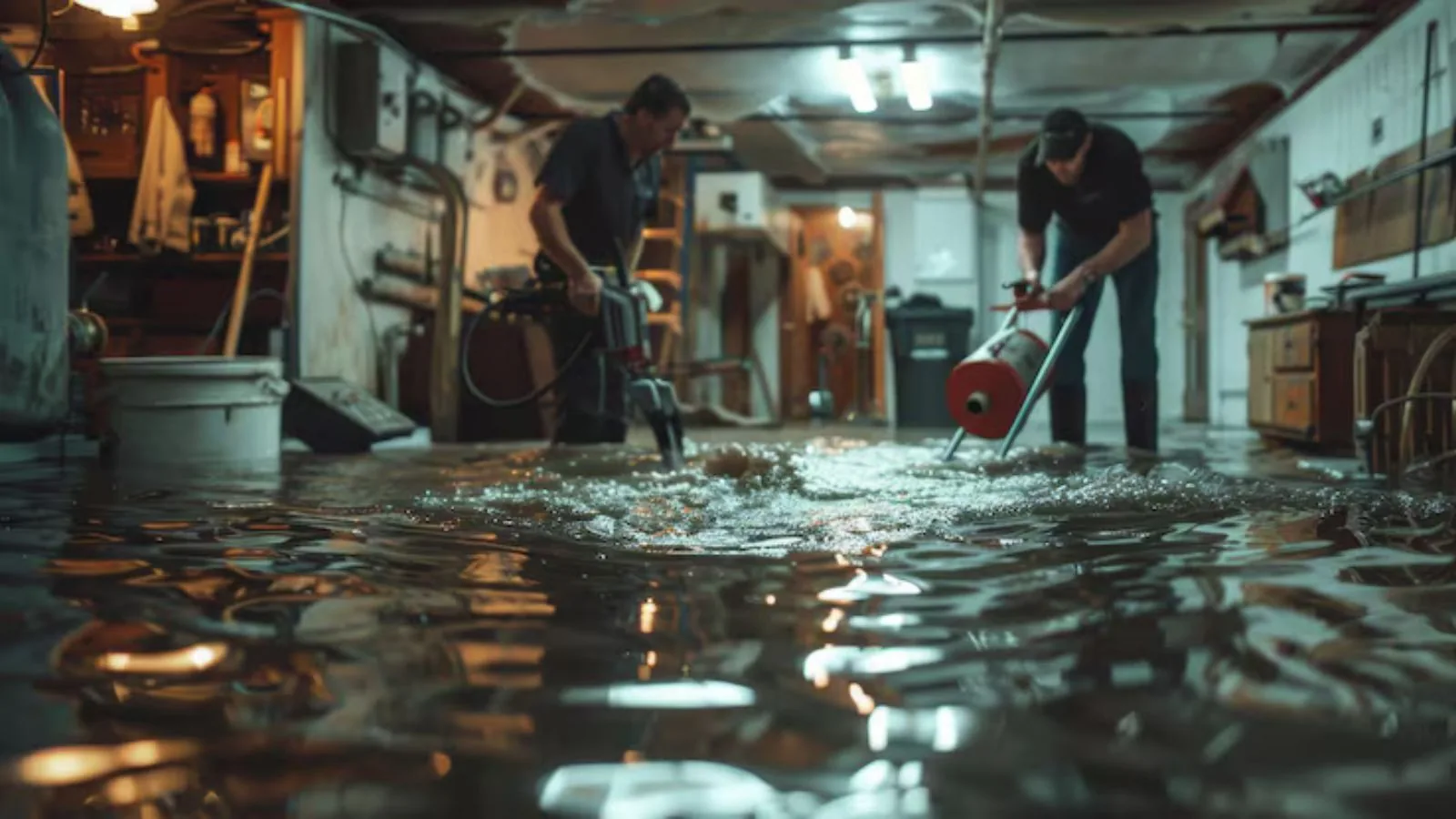
Water extraction is the removal of standing water from floors, carpet and low spaces with pumps and extraction units. When water is standing in an Asbury Park home or shop, each hour it sits lets it travel into drywall, baseboards and the subfloor. Treat it as an emergency. The line is open 24/7, and the dispatcher can begin arranging a crew while you are still on the phone.
While you wait, stop the source if you can reach the shutoff safely. Keep everyone out of water that touches outlets, power strips or appliances. Cut power at the panel only if the panel is dry and you can reach it without stepping in water. Lift rugs, electronics and paper off the floor, and do not run a household vacuum through standing water.
When standing water is an emergency
Some wet floors can wait for a mop. Others cannot. Call right away if any of these describe your situation, because the water is still doing damage or the risk to people is rising.
- Water is still coming from a pipe, appliance or roof, or it is rising.
- Water has reached outlets, baseboard heaters, the electrical panel or the furnace.
- A toilet or floor drain is overflowing, which makes it a sewage backup problem first.
- Carpet and pad are soaked from wall to wall, or water is dripping into the room below.
- The water came in from outside, which points to flood damage and a different cleaning plan.
How the water comes out
Deep water goes first. A submersible pump drops into the lowest point and moves the bulk of it out through a hose. Once the depth falls to a thin film, extraction units take over. A weighted wand glides across carpet and pulls water out of the pad, and a squeegee tool does the same on hard floors.
After extraction, a moisture meter checks the floor, the lower walls and the baseboards. Extraction gets rid of liquid water, but the materials still hold moisture. That is why the next step is structural drying, where air movers and dehumidifiers pull the rest out.
| Situation | Method | What happens next. |
|---|---|---|
| Several inches over a basement floor | Submersible pump, then an extraction wand | Moisture mapping of walls and the slab. |
| Carpet and pad soaked through | Weighted wand extraction, pad removal if saturated | Dry or replace, see the carpet page. |
| Thin water on tile or sealed floors | Squeegee and wet vacuum | Check grout lines, seams and subfloor. |
| Water from a drain, toilet or outside | Extraction with contamination controls | Disinfection, and removal of porous materials. |
Water category decides the plan
ANSI/IICRC S500, the published standard for water damage restoration, sorts water into three categories. Category 1 comes from a clean source such as a supply line. Category 2 carries some contamination, such as washing machine overflow. Category 3 is grossly contaminated, as with sewage or river water.
Category is not fixed. Clean water that sits in carpet for days can degrade into Category 2 or 3. A crew reads the source, the time elapsed and the materials involved, then decides what can be dried and what must be removed.
Standing water right now? Call the 24/7 emergency line and the dispatcher will walk you through the first steps.
Call (732) 352-9660Lower levels and water that comes from the ground
If the water rose from the ground or the street rather than from a pipe, treat it as flood water. Asbury Park sits between the Atlantic and Deal Lake, Wesley Lake and Sunset Lake, so heavy rain and coastal storms can push water into low rooms. Check the FEMA flood map for your address, and ask the city building department about drainage near your street.
A flooded basement is a common version of this problem. The basement page covers sump failure, seepage and finished spaces in detail. Neighborhood guides cover the Wesley Lake and Lake Avenue area and Deal Lake Drive, where lake flooding has been reported.
What moves the price of this job
No honest total exists until someone sees the water. These factors set the price of an extraction job.
Depth and area
A film of water over one room needs far less time and equipment than several inches across a whole level.
Water category
Contaminated water adds protective gear, disinfection and disposal of porous materials.
Access and floors
Stairs, basements and upper floors change pump setup and hose runs.
Time standing
Water that sat for days soaked deeper into materials and may need more removal.
What follows
Drying and repair are separate steps, and the scope should say whether they are included.
Want your real number? Call, describe the water, and the price is explained before work starts.
Insurance and extraction
Sudden and accidental water, such as a burst supply line or an overflowing appliance, is often covered by a homeowners policy. Gradual leaks and flood are commonly handled differently, and flood usually needs its own policy. Read your policy or ask your insurer.
Photograph the water before it is moved, and keep the moisture readings and equipment notes from the job. Those records show your adjuster the extent of the loss. No one can promise a claim will be approved.
Water extraction questions
Do you handle water extraction emergencies at night or on weekends in Asbury Park?
Yes. The line is open 24/7, including nights, weekends and holidays. Same-day response is offered when a crew is available, and the dispatcher tells you plainly what to expect. While you wait, stop the source, stay out of water that touches electrical equipment and lift valuables off the floor.
How long does it take to remove the water?
It depends on the volume, the access and the pump capacity. A thin film in one room can be cleared quickly, while a flooded level takes longer. The dispatcher or the on-site professional can explain the plan for your specific space.
Can I use a shop vacuum on standing water?
For a small spill of clean water, a wet-rated shop vacuum works. It is not suited to deep water, and it is unsafe near live outlets. Never use it on water that may be contaminated. When in doubt, stay out and call.
Can I rent a pump or dehumidifier and do this myself?
We do not offer equipment rental. Consumer equipment handles a small spill, but larger losses need professional gear and moisture readings to confirm the structure is dry. Wet materials left behind are how mold starts.
Do I have to throw out the carpet?
Not always. Carpet that was soaked by clean water and dried quickly can often be saved, while the pad is often replaced. Contaminated water changes that. The carpet water damage page explains how the decision is made.
Water on the floor now? The dispatcher can start sorting your next steps in minutes. Call any hour.
Call (732) 352-9660