

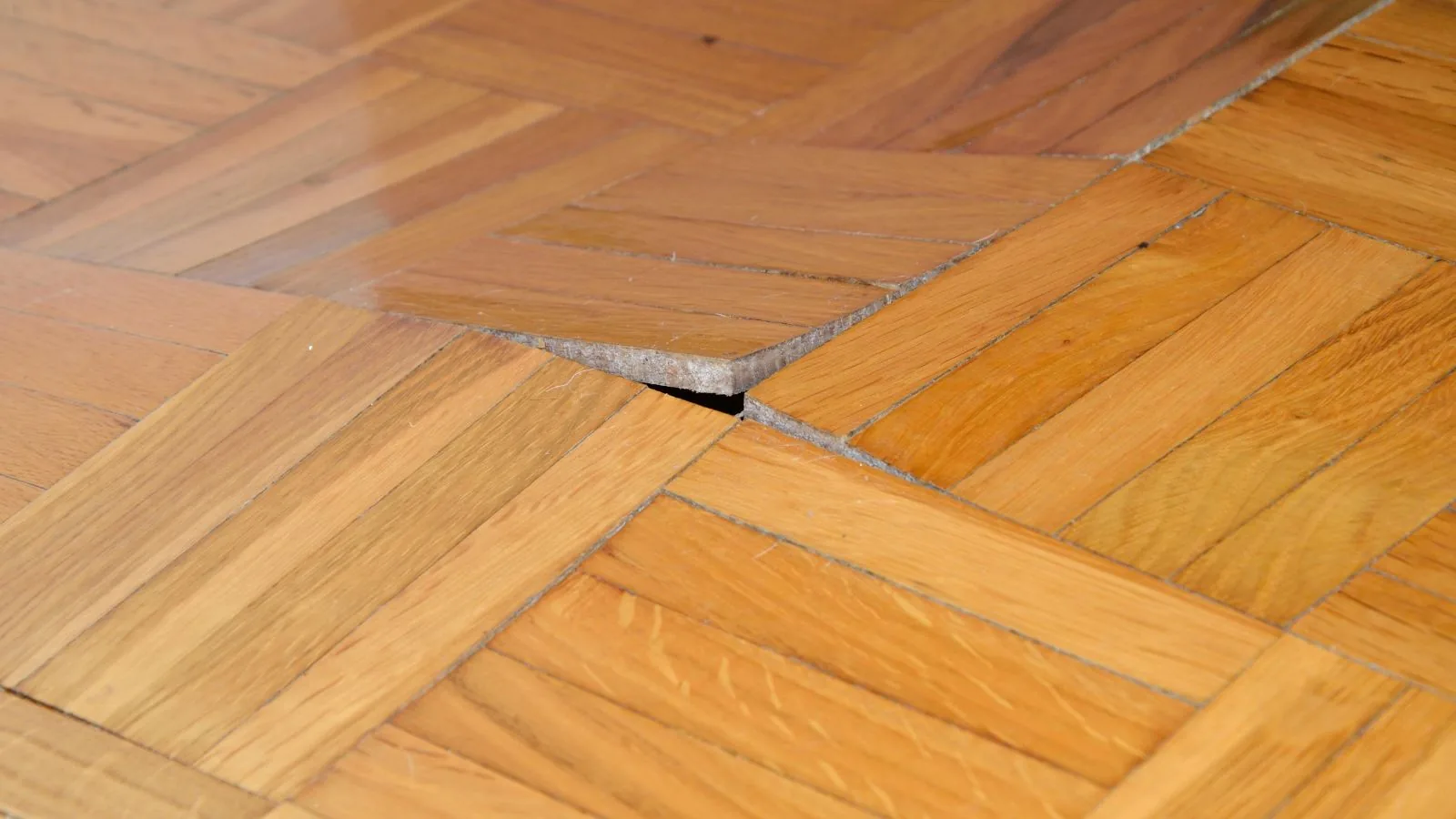
Hardwood floor water damage repair covers drying and restoring wood floors that took on water from a leak, flood or humidity. Wood absorbs water and swells. Boards then cup, crown or lift. In Asbury Park, where salt air and summer humidity already keep indoor moisture high, a leak can push a floor past recovery quickly. Call us soon after the water, because early drying saves more boards.
Lift rugs and furniture off the floor and wipe standing water. Do not use heat guns or fans aimed at one spot, which can crack boards. Keep traffic off the floor while it is wet.
What water does to hardwood
Boards swell as they take on moisture and press against each other. Edges lift into a bowl shape called cupping. If the swelling is severe, the floor can buckle off the subfloor. Dark staining often means water sat long enough to reach the finish and fibers.
Engineered hardwood, solid hardwood and laminate each respond differently. Solid strip flooring can often be dried and sanded. Engineered boards with a thin top layer are less forgiving. Laminate usually swells at the edges and does not recover.
| Condition | Typical outcome | Notes. |
|---|---|---|
| Light cupping, caught early | Often dries flat | May need sanding and refinishing. |
| Wet but not yet cupped | Good chance of saving | Dry fast with controlled airflow. |
| Buckled off the subfloor | Usually replaced | Lifted boards rarely re-seat. |
| Black staining or mold | Replaced in the damaged area | See the mold page. |
| Laminate swelling at edges | Replaced | Swelling does not reverse. |
How hardwood is dried
The crew first removes standing water with extraction. Special mats and drying systems pull moisture up out of the boards and from beneath them, since water lodges in the subfloor. Moisture meters track the boards and the subfloor until both reach safe readings.
Drying hardwood too fast causes cracking, and too slowly invites mold. The balance is set by the readings, in line with the structural drying approach.
ANSI/IICRC S500 includes guidance on drying wood floors and subfloors, and it stresses measuring moisture instead of judging by touch. That is why a floor is checked with a meter before any refinishing starts.
Hardwood soaked? Call the line and get drying started before it cups.
Call (732) 352-9660Repair and refinish
Once the floor is flat and dry, a refinisher sands and recoats it. Replacement boards are blended in where needed. Finish matching can take care, since stain and sheen vary.
Slab and basement moisture can also wreck hardwood from below. See the slab leak page and crawl space page for those sources.
Do not seal a damp floor with a new coat of finish. Trapped moisture causes peeling, clouding and mold.
Think about the whole room before you commit to a repair. Boards under cabinets, along walls and near vents may hold water that the open floor does not. Ask the crew to take readings in those spots, and to check the subfloor in several places. A floor that looks flat today can still cup next week if moisture remains below it. Keep humidity moderate in the weeks after drying.
What moves the price of this job
Hardwood repair is priced on how much of the floor survives and the finish needed.
Wood type
Solid, engineered and laminate floors have different outcomes.
Area
Larger floors need more drying equipment and refinishing.
Time wet
Floors left wet for days are more likely to be replaced.
Subfloor
Wet subfloors add drying time or replacement.
Finish
Sanding, staining and sealing are separate from drying.
Want your real number? Call and the scope and price are explained before work starts.
Insurance and hardwood floors
Sudden leaks are often covered for flooring damage, while gradual seepage often is not. Read your policy and ask your insurer.
Photograph the floor before work and keep the flooring specifications. We cannot promise any claim outcome.
Hardwood floor questions
Can a cupped hardwood floor be saved?
Often, if dried promptly. Many floors flatten as moisture leaves. Sanding and refinishing may be needed afterward.
How long before hardwood is ruined?
Damage starts within hours, and several days wet usually means replacement. Acting early is what saves the floor.
Should I remove the boards myself?
Not before a crew checks. Removing boards can help drying in some cases, but it can also damage a salvageable floor.
Can I just run fans?
Fans help surface drying but leave water in the subfloor. A moisture reading shows whether it is truly dry.
Is laminate repairable?
Swollen laminate rarely recovers. It is usually replaced.
Hardwood wet? Call the line and get drying started before boards cup.
Call (732) 352-9660