

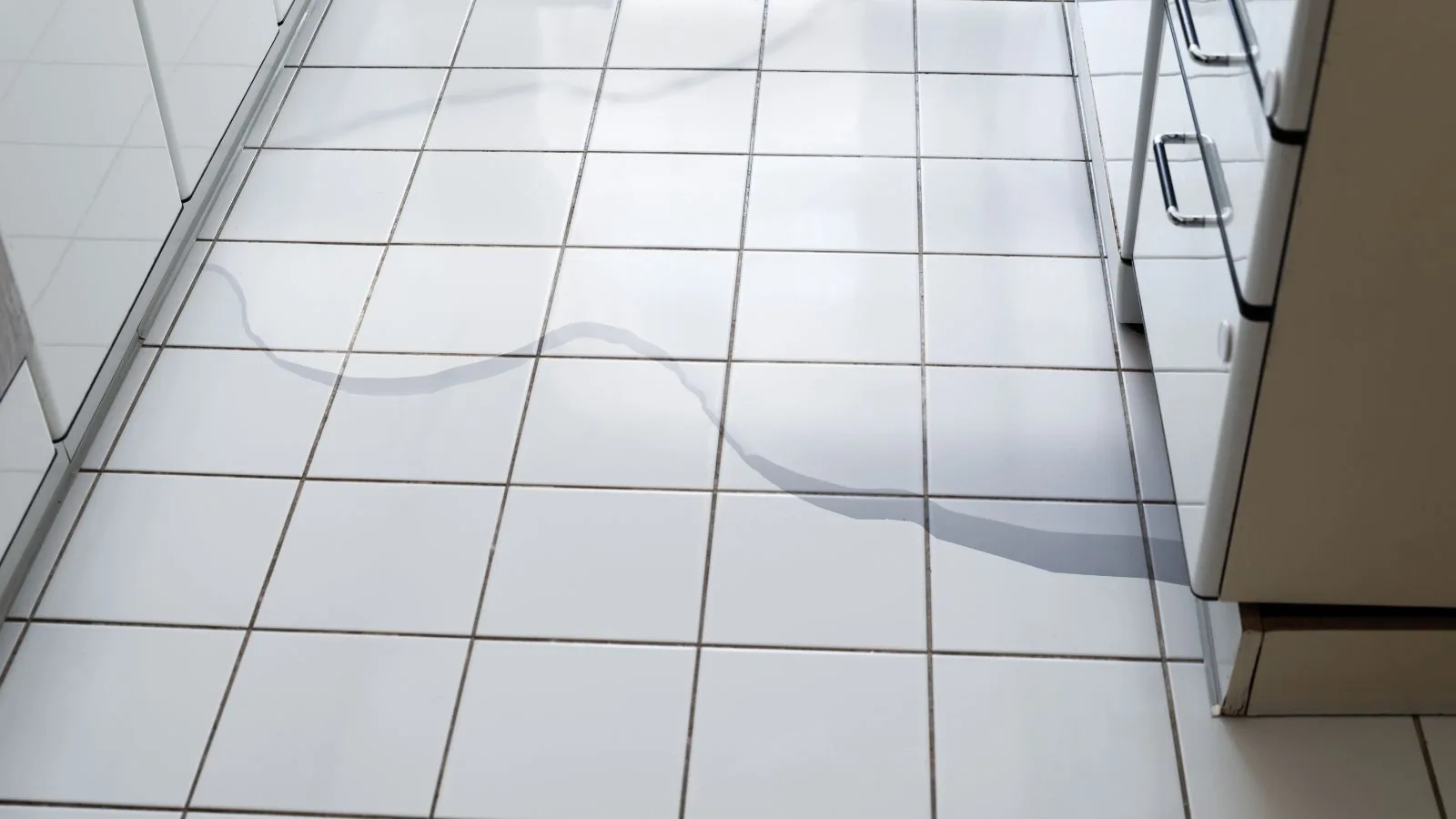
Kitchen water damage restoration is the drying and repair of cabinets, flooring, walls and ceilings after a kitchen leak. Kitchens have supply lines, drains, a dishwasher, a refrigerator and often a sink with a disposal, which makes them one of the most common places for water loss. If water is on your Asbury Park kitchen floor now, close the valve under the sink or the main and call.
Move food and small items out of the area, and unplug appliances if the outlets are dry. Do not stand in water near the stove or refrigerator.
What kitchen water damage looks like
Sudden floods are easy to spot. Slow leaks are not. A swollen cabinet base, a floor that feels soft near the sink, peeling laminate, a musty smell under the sink and warped baseboards all mean water has been present for some time.
Kitchen cabinets are often made from particleboard that swells and crumbles when wet. Solid wood cabinets and stone tops usually tolerate water better. Cabinet material decides what can be dried and what must be replaced.
| Material | Typical outcome | Notes. |
|---|---|---|
| Particleboard cabinet bases | Often replaced | Swells and loses strength. |
| Solid wood cabinets | Often dried and kept | Check for warping. |
| Tile and grout | Surface survives | Subfloor beneath may be wet. |
| Vinyl and laminate | Often lifted to dry the subfloor | Water trapped underneath. |
| Hardwood | Depends on duration | See the hardwood page. |
How the work goes
The crew removes water, pulls toe kicks and checks behind appliances. Moisture meters map the subfloor and walls. When the source is an appliance, the appliance leak page explains the typical failures. A supply line burst is covered on the burst pipe page.
Drying follows the structural drying process, and extraction at the start uses water extraction methods.
ANSI/IICRC S500 sets the approach for drying cabinets, flooring and walls after a kitchen leak. It asks the crew to measure moisture in each material and to remove what cannot be dried.
What to do before help arrives
- Close the valve under the sink or the main valve.
- Unplug appliances only if the outlets are dry.
- Move food and small items out of the wet area.
- Stay clear of the stove and refrigerator while water is on the floor.
Kitchen leak soaked the floor? Call the line for drying and repair.
Call (732) 352-9660Plan around the kitchen being limited for a while. Water and power to the sink and dishwasher may be shut off during drying and repair, and appliances may be moved to another room. Ask the crew early which fixtures you can use and how long the work is likely to take, so you can arrange meals and storage.
Keep receipts for meals and storage if your policy includes additional living expense coverage. Photograph the kitchen before cabinets or flooring come out, and save samples of damaged finishes so the repair can be matched.
Repair after drying
Once readings are dry, repair begins. That may include replacing cabinet bases, laying new flooring, patching drywall and repainting. Matching existing finishes is part of the scope.
If an upstairs kitchen leaked, the ceiling below may be stained, and the ceiling page applies.
A small leak under a sink is cheap to fix and expensive to ignore. Check under your sinks every few months with a flashlight.
What moves the price of this job
Kitchen restoration is priced on the cabinets, floors and drying involved.
Cabinets
Material and layout decide whether they dry or are replaced.
Flooring
Tile, vinyl and wood respond differently.
Drying
Subfloors and walls need equipment and readings.
Appliance moves
Disconnecting and moving appliances adds labor.
Finish matching
Matching paint, trim and flooring affects repair scope.
Want your real number? Call and the scope and price are explained before work starts.
Insurance and kitchen leaks
Sudden kitchen leaks are often covered, while long-term seepage often is not. Read your policy and ask your insurer.
Photograph the source and the damage. We cannot promise any claim outcome.
Kitchen water damage questions
Can wet cabinets be saved?
Solid wood can often be dried. Particleboard usually swells and is replaced. A crew checks each cabinet with a meter.
Do you pull the dishwasher?
Yes, when needed to reach the floor and wall behind it. We disconnect and reconnect only with the right trade where required.
Is a soft spot on the floor near the sink serious?
It can mean the subfloor has been wet for some time. Moisture readings show how far it goes.
Can mold grow under my sink?
Damp conditions support mold. See the mold remediation page if you see growth or smell mustiness.
Will insurance cover kitchen water damage?
Sudden leaks often are covered. Slow leaks often are not. Check with your insurer.
Kitchen soaked? Call the line and get drying and repair scheduled.
Call (732) 352-9660