

Why does my house still feel damp after the water was cleaned up?
Wet materials release moisture slowly. After a mop or wet vacuum, floors look dry while drywall, framing, subfloors and insulation still hold water. That water evaporates into the room, which is why the air feels heavy, windows fog and a musty smell appears.
Structural drying is the process of removing that hidden moisture with controlled airflow and dehumidification, then confirming the result with readings. Without it, damp materials can warp, stain and grow mold.
How structural drying works
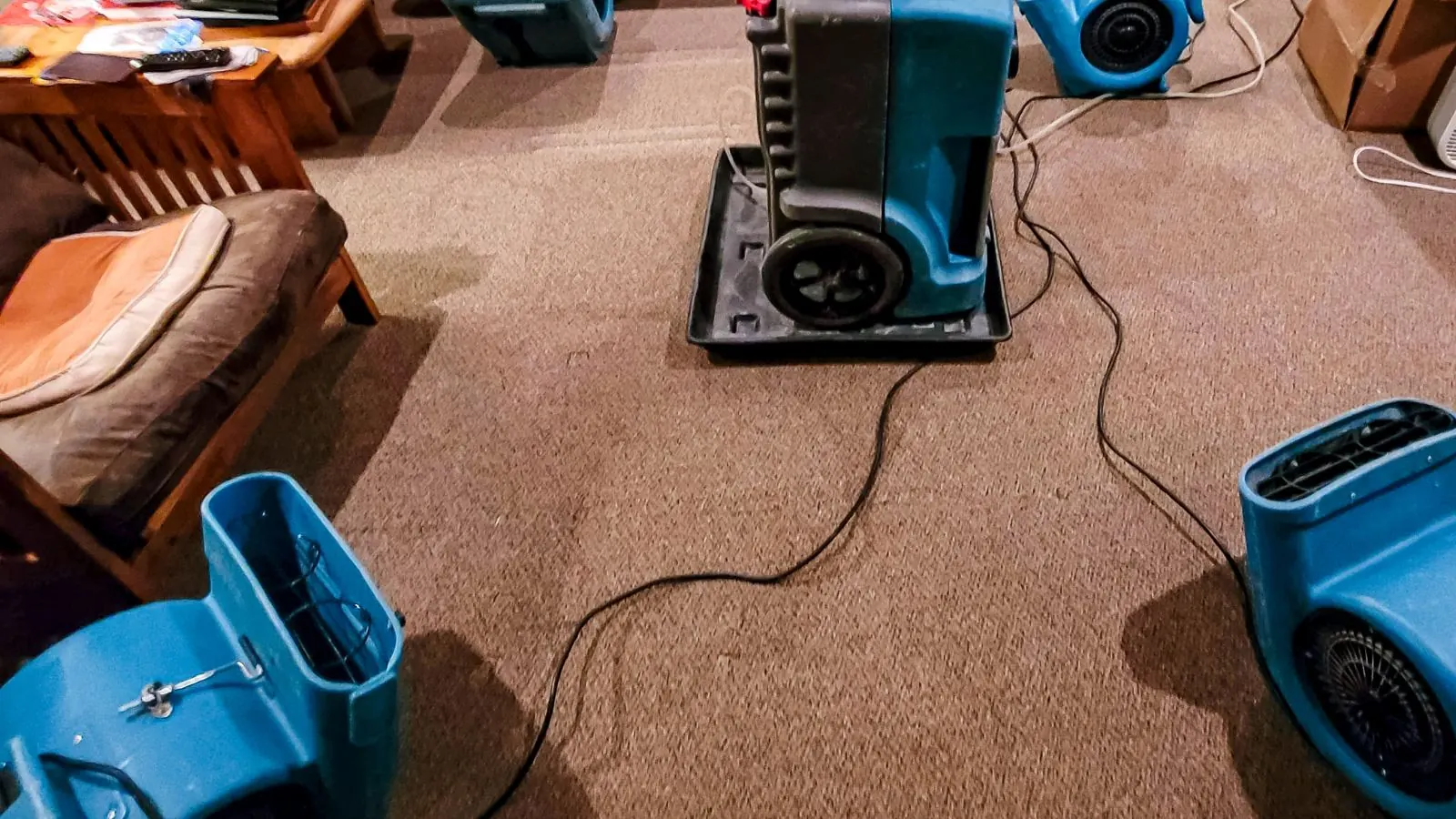
Drying relies on three things working together. Air movers push dry air across wet surfaces to speed evaporation. Dehumidifiers pull that moisture out of the air so it does not settle elsewhere. Heat, where appropriate, speeds the exchange.
The crew sets equipment based on the room size and material. Wall cavities may get small holes or removed baseboards for airflow. Equipment runs for days, and the crew returns to take readings and adjust it.
| Material | Drying outlook | Notes. |
|---|---|---|
| Concrete and masonry | Slow but dries well | Holds moisture for days. |
| Wood framing and subfloor | Dries with time and airflow | Check readings before closing walls. |
| Drywall | Often dries if caught fast | Removed when saturated or contaminated. |
| Insulation | Rarely dries in place | Usually replaced. |
| Carpet pad | Rarely worth drying | Usually replaced. |
Humidity targets matter as much as the surfaces. Indoor air that stays damp keeps materials wet, so the crew watches the humidity in the room as well as the readings in the walls. Closing windows and doors during drying keeps outside humid air from undoing the work. Expect warm air and steady noise while the equipment runs, and keep fans and dehumidifiers plugged in and unobstructed until the crew removes them.
Moisture readings decide when the job is done
Moisture meters and thermal cameras show where water remains. The crew records a baseline in dry areas and sets a goal for each material. Equipment comes out only when readings reach that goal, not after a set number of days.
The ANSI/IICRC S500 standard describes this approach to water damage restoration. Your records show the starting readings, the daily readings and the final readings, which also help your insurer understand the loss.
What to do before help arrives
- Keep windows and doors closed so humid air stays out.
- Remove wet rugs and items from wet floors.
- Do not seal or paint damp surfaces.
- Photograph the damage and write down when the water arrived.
House still damp? Call the line and get a moisture check scheduled.
Call (732) 352-9660When drying follows other work
Drying usually follows water extraction after a leak, and it continues through flood and sewage cleanups once contaminated material is removed. After drying, repairs begin on walls, floors and ceilings.
If drying gets delayed, mold can start. The mold remediation page covers that situation, and it is far cheaper to prevent than to fix.
What moves the price of this job
Drying cost follows equipment, area and time. Each factor has a clear driver.
Area and materials
More wet surface and denser materials mean more equipment.
Water category
Contaminated materials are removed before drying starts.
Drying days
Concrete and framing take longer than carpet.
Monitoring visits
Readings at each visit confirm progress.
Access
Tight spaces and multiple floors take more setup.
Want your real number? Call and the scope and price are explained before work starts.
Insurance and drying records
Insurers commonly ask for moisture logs and photos. Ask for copies of the readings. Sudden water losses are often covered, and slow leaks and flood are commonly handled differently. Read your policy and ask your insurer.
We cannot promise any claim outcome.
Structural drying questions
Do you handle drying emergencies at night or on weekends in Asbury Park?
Yes. The line is open 24/7, and same-day response is offered when a crew is available. The sooner drying starts, the more materials can be saved.
How long does drying take?
Often several days, depending on the materials and how wet they are. Concrete and thick framing take longest. Equipment stays until the readings reach the dry goal.
Why is the equipment so loud?
Air movers and dehumidifiers move a lot of air. The noise means moisture is leaving the structure.
Can I use a household dehumidifier instead?
For a small damp room, it helps. For a wet structure, it is not enough, because it cannot dry wall cavities or hold the right conditions.
How do I know the building is dry?
The crew measures moisture content in each material and compares it to dry readings from unaffected areas. Equipment is removed only when they match.
Wet walls or floors? Call the line and get a drying plan started today.
Call (732) 352-9660