

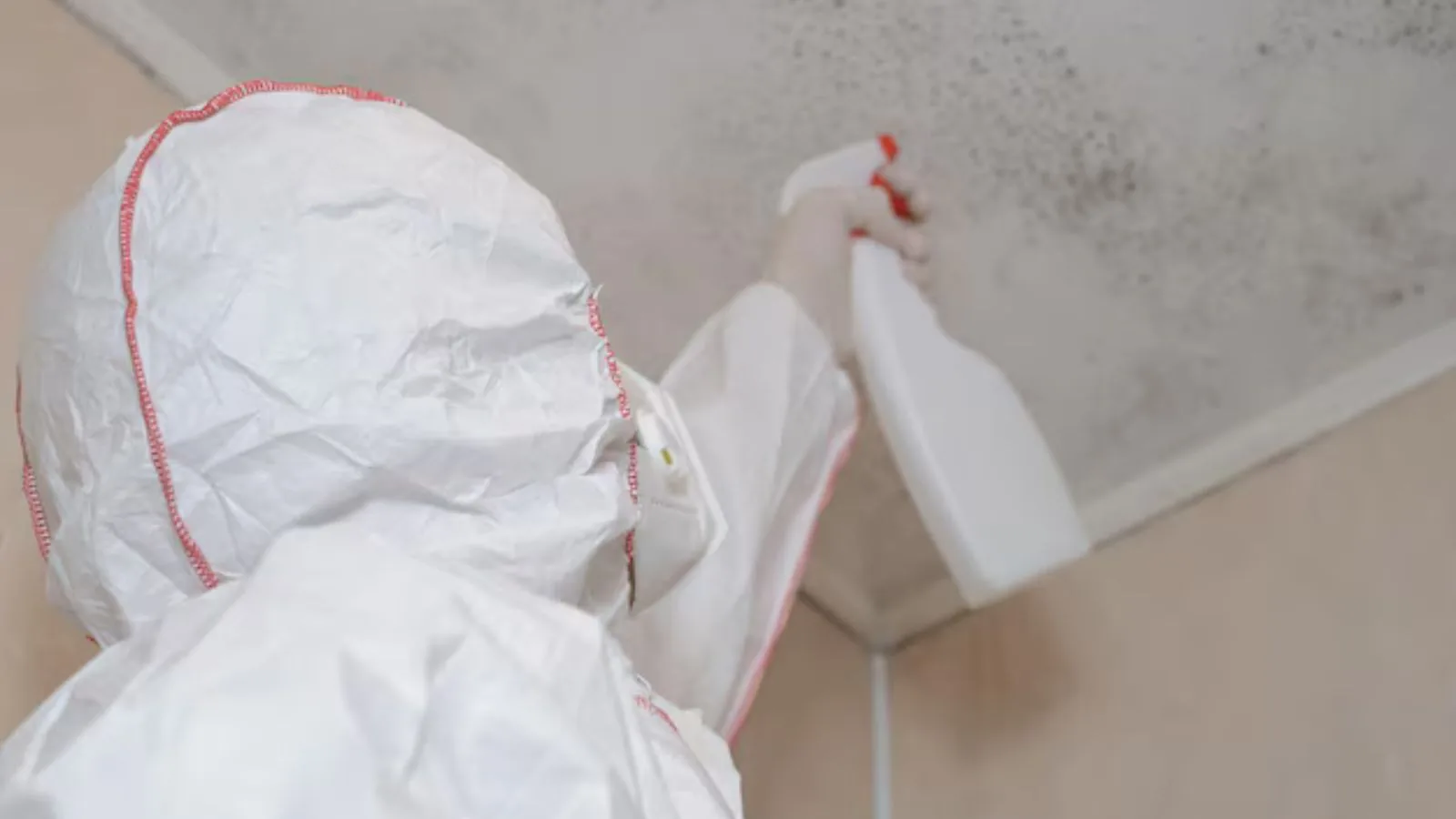
Why does my house smell musty and what are these dark spots?
A musty smell and dark or fuzzy spots on walls, ceilings, baseboards or under sinks usually mean a surface has been damp for a while. Mold needs moisture, a food source such as drywall or wood, and time. Remove any one of them and growth stops.
Do not scrub or spray bleach on large areas, and do not disturb it with a fan. Stop the water source, keep the area closed off and call for an assessment.
We do not make health claims about mold. If anyone in the home has symptoms, ask a physician. The New Jersey Department of Health publishes mold guidelines you can read for general information.
Where mold hides after water damage
Mold grows behind wallpaper and paneling, inside wall cavities, above ceiling tiles, under carpet and pad and in attics and crawl spaces. It follows water, so the key question is where the water went.
A previous pipe leak, an AC drip, a wet basement or a roof leak often explains a growth site. Remove the cause first or the mold returns.
| Step | What is done | Purpose. |
|---|---|---|
| Assess | Find moisture and growth with meters and inspection | Know the extent. |
| Contain | Seal the area and use negative air | Keep spores from spreading. |
| Remove | Remove affected porous materials and clean surfaces | Take out the growth. |
| Dry | Reach dry readings | Remove the cause. |
| Verify | Post-work inspection and testing | Confirm the area is clear. |
Mold inspection and clearance testing
An inspection finds the moisture and the growth. Clearance testing after cleanup confirms the area is back to normal conditions. Many lenders, buyers and insurers ask for it, and having a written clearance report helps during a sale or refinance.
An independent tester has no stake in the cleanup result, which makes the report more credible. Ask who performs the testing and what they sample.
What to do before help arrives
- Stop the water source first.
- Keep the area closed and do not run fans across it.
- Do not scrub or spray large areas.
- Photograph the growth and write down when you first noticed the smell.
Musty smell or visible growth? Call the line to schedule an assessment.
Call (732) 352-9660Prevention after water damage
Dry fast. The structural drying process exists to prevent mold. Wet materials that cannot dry are removed, and humidity is kept down.
Fix leaks promptly, use bathroom fans and keep indoor humidity moderate. Replace wet carpet and drywall that cannot be dried.
Ventilation and humidity affect how fast growth returns. A closed room with little air movement and high humidity holds moisture on cool surfaces such as exterior walls and window frames. A dehumidifier, working bath fans and a clear gap between furniture and walls keep air moving. After cleanup, keep checking the area for new staining or smells over the following weeks, and call again if either returns.
What moves the price of this job
Mold work is priced on the area and what must be removed.
Area affected
More growth means more containment and removal.
Materials
Porous materials such as drywall and insulation are replaced.
Location
Attics and crawl spaces take more setup.
Testing
Inspection and clearance are separate line items.
Source repair
Plumbing or roof repair is separate.
Want your real number? Call and the scope and price are explained before work starts.
Insurance and mold
Policies vary. Many cover mold only when it follows a covered water loss, and many exclude it when caused by long neglect. Read your policy and ask your insurer.
Photograph the growth and keep inspection reports. We cannot promise any claim outcome.
Mold questions
Do you handle mold emergencies at night or on weekends in Asbury Park?
Yes. The line is open 24/7, and same-day response is offered when a crew is available. Stop the water and call.
My lender wants a clearance report. Can you help?
Yes. Clearance testing after cleanup produces a written report. An independent tester gives it more weight.
Can I just bleach it?
Bleach on porous materials does not remove the roots. Large areas should be handled with containment.
Is the musty smell enough to call about?
Yes. A musty smell means moisture is present, even if nothing is visible yet.
Does homeowners insurance cover mold?
Sometimes, when it follows a covered loss. Read your policy and ask your insurer.
Musty smell or growth? Call the line and schedule an assessment.
Call (732) 352-9660