

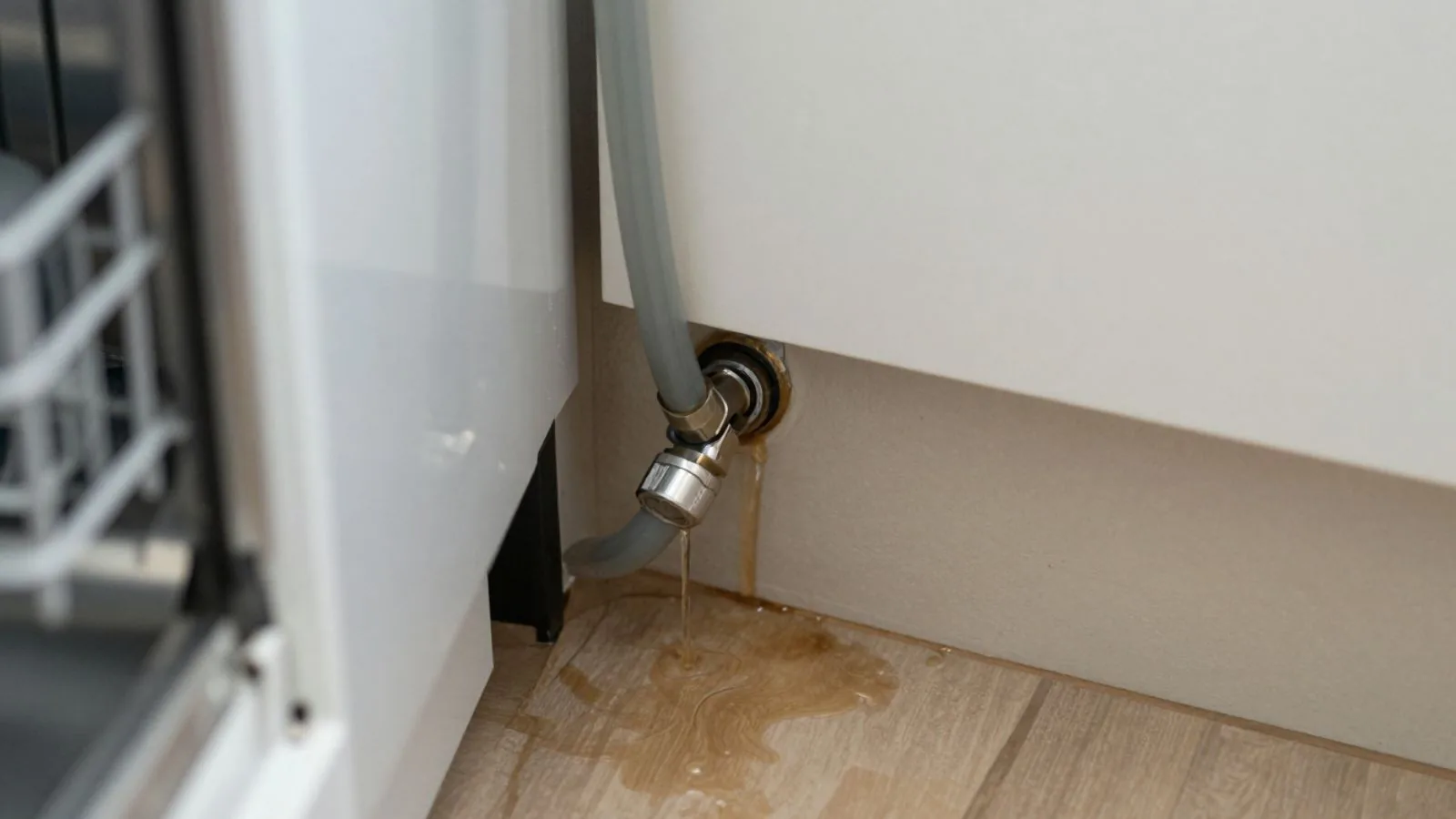
Appliance leak water damage comes from washing machines, dishwashers, refrigerators with ice makers, and other fixtures that connect to a supply line or drain. These leaks often run behind or under the appliance, so they spread before anyone sees them. If an appliance in your Asbury Park home or shop is leaking, call the 24/7 emergency line after shutting off its water.
Close the small supply valve behind the appliance, or the main valve if you cannot reach it. Unplug the appliance only if the outlet is dry. Pull the unit away from the wall if it is safe to do so, and leave carpet and flooring alone until the source is stopped.
Why appliance leaks do more damage than they look
A burst washing machine hose can discharge hundreds of gallons in an hour. A slow dishwasher leak can run for weeks under a cabinet and show up as a soft floor or a musty smell. Both are real losses, though they look different.
Washer overflow is often Category 2 water under the S500 standard, since it carries detergent and soil. Dishwasher and refrigerator line leaks are typically cleaner at first, but both degrade as they sit.
| Appliance | What usually fails | Where water goes. |
|---|---|---|
| Washing machine | Supply hose, drain hose, overflow | Floor, subfloor, rooms below. |
| Dishwasher | Door gasket, supply line, drain connection | Under the cabinet and kitchen floor. |
| Refrigerator | Ice maker or water line | Under the unit, behind the wall. |
| Sink and disposal | Trap, supply lines, seals | Cabinet base and floor. |
How the cleanup works
First, extraction clears surface water. The crew then lifts toe kicks, pulls baseboards and checks the subfloor with moisture meters. Water under vinyl, tile or laminate stays trapped, so the flooring often has to come up.
Kitchens add cabinets and hardwood to the picture. See the kitchen page and the hardwood page for those materials. Drying then follows the process on the structural drying page.
What to do before help arrives
- Close the supply valve to the appliance, or the main valve.
- Unplug the appliance only if the outlet is dry.
- Stay out of water that touches outlets or cords.
- Lift rugs and items off the wet floor and photograph the damage.
Appliance leaking? Shut its valve and call the 24/7 emergency line.
Call (732) 352-9660Slow leaks and when they become a mold concern
Leaks that run for weeks leave materials wet for long enough that mold can start. If you smell mustiness near an appliance or see dark spots on a wall behind it, read the mold remediation page.
Moving the appliance for inspection reveals a lot. Look for a damp floor, staining on the wall and rusted fittings. A leak from an upstairs laundry may only appear as a ceiling stain below.
Replace rubber washing machine hoses with braided steel hoses, and check them every year. Turn off the washer supply valves when you travel.
What moves the price of this job
Appliance leaks vary from a wet mat to a rebuilt kitchen floor.
Run time
A leak found in minutes costs far less than one that ran for weeks.
Flooring
Tile and vinyl trap water underneath, which can require lifting them.
Cabinets
Kitchen and laundry cabinets can swell and may need replacing.
Drying
Subfloors and wall cavities take days to dry.
Rooms below
Water that reached a ceiling or basement below adds scope.
Want your real number? Call and the scope and price are explained before work starts.
Insurance and appliance leaks
Sudden appliance discharge, such as a hose burst, is often covered for the resulting water damage. Gradual leaks and appliance wear are commonly treated differently. Read your policy and ask your insurer.
Keep the failed hose or part if you can, and photograph the area before cleanup. No one can promise how a claim will go.
Appliance leak questions
Do you handle appliance leak emergencies at night or on weekends in Asbury Park?
Yes. The line is open 24/7, and same-day response is offered when a crew is available. Close the appliance's water valve and call.
Should I move the appliance myself?
Only if it is safe. Unplug it first if the outlet is dry, and avoid pulling a heavy unit through standing water. The crew can move it during cleanup.
My washing machine overflowed. Is the water dirty?
It is often treated as Category 2 because of detergent and soil. Carpet and pad are usually handled more carefully than after a clean supply leak.
How do I know if the leak is behind a wall?
Look for staining, bubbling paint, a musty smell or a rise in your water bill with no change in use. Moisture meters confirm it.
Will my insurance cover the damage?
Sudden discharge is often covered, while gradual leaks often are not. Check your policy and ask your insurer.
Washer or dishwasher leak? Call the line and get extraction and drying started.
Call (732) 352-9660