

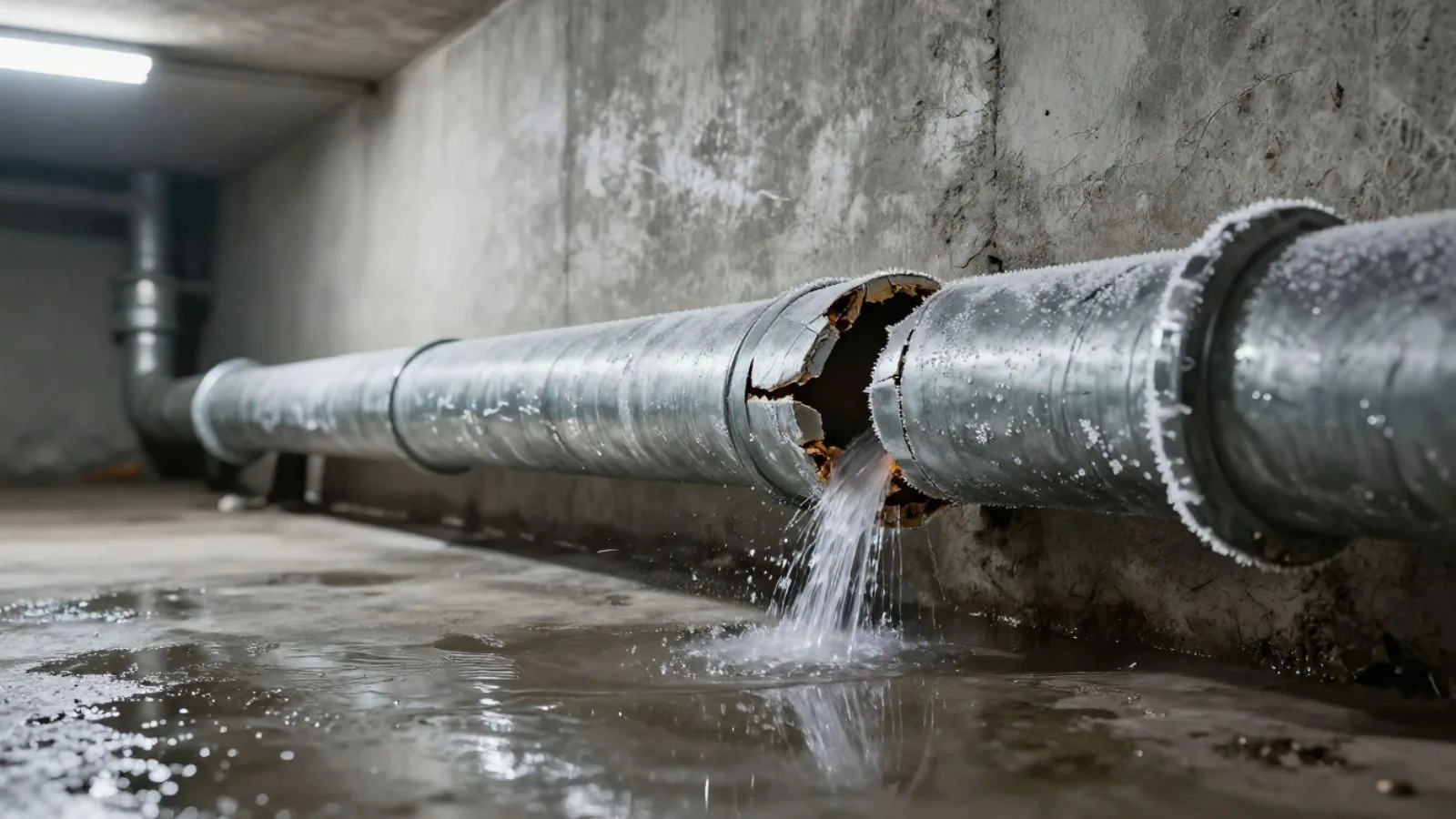
Frozen pipe water damage happens when water inside a pipe turns to ice, the pipe cracks, and the thaw releases water into walls, floors and ceilings. Often the break goes unseen until the ice melts. If you suspect a frozen or split pipe in Asbury Park, call the 24/7 emergency line and close the main water valve before anything thaws.
Do not use an open flame to thaw a pipe. Warm air from a hair dryer on low, kept moving, is safer. If you see wet drywall or hear water running behind a wall, keep the main off, stay out of wet areas near outlets and call.
Why the thaw is the dangerous part
Ice can plug a split pipe like a cork. While the pipe is frozen, little water escapes. As the pipe warms, the ice melts, the plug goes, and pressurized water pours through the crack into a space nobody is watching.
This is why a frozen pipe you caught with no leaks yet is still worth a plumber visit. A pipe that froze once has a weakened wall, even without a visible split.
Where pipes freeze first
Exposure decides it. Pipes in unheated spaces such as crawl spaces, exterior walls, garages and attics freeze first. So do lines near vents or gaps that let in cold air. Whether your home has enough exposure to freeze depends on the building, so check the National Weather Service forecast during a hard freeze rather than assuming.
A crawl space with a damaged vapor barrier or missing insulation can expose lines to cold, which ties this page to the crawl space water damage page. A basement line that froze is a burst pipe problem once it thaws.
| What you notice | Likely situation | Action. |
|---|---|---|
| Faucet runs slow or not at all in cold weather | Ice blockage in a supply line | Open the tap, warm the area, keep the main ready to close. |
| Frost or bulging on an exposed pipe | Ice and pressure building | Add safe warmth, call a plumber, watch for leaks. |
| Water appearing as the pipe thaws | Split pipe leaking | Close the main immediately, call the 24/7 line. |
| Wall or ceiling suddenly wet after a cold spell | Hidden break now releasing water | Close the main, stay clear of outlets, call. |
What restoration involves after a pipe thaws
Once the water is off, water extraction clears standing water. Ceilings below the break are a special worry, because water collects above the drywall. The ceiling water damage page explains how a bulging or sagging ceiling is handled safely.
Insulation soaked by a pipe break loses its value and is usually removed. Air movers and dehumidifiers then dry the cavity, as described on the structural drying page. Repair follows only when readings are dry.
ANSI/IICRC S500 describes how water from a failed supply line is classed and dried. A thawed pipe release starts as clean water, and fast extraction keeps it from becoming something worse inside the wall cavity.
Pipe split or thawing? Close the main and call the 24/7 emergency line.
Call (732) 352-9660Prevention that costs little
In a hard freeze, open cabinet doors under sinks on exterior walls so room air can reach the pipes. Let a faucet drip when a freeze is forecast, and keep the heat on, even in rooms you are not using. Disconnect and drain outdoor hoses early in the season.
If you will be away, ask a neighbor to check the house, or have the water shut off at the main. A winter vacancy is when a small crack becomes a flooded house.
What moves the price of this job
A frozen pipe job is priced on how much the thaw released.
Time to shutoff
A break found as it thaws wets far less than one that ran for hours.
Rooms and levels
Water in an attic or wall cavity can run down through several floors.
Insulation and finishes
Wet insulation is removed, and drywall and flooring may follow.
Drying time
Wall cavities and subfloors take longer to dry than open floors.
Rebuild scope
Repair and paint are priced apart from mitigation.
Want your real number? Call and the scope and price are explained before work starts.
Insurance and cold-weather leaks
Sudden damage from a pipe that froze and split is often covered, but policies can ask whether you kept the heat on and took reasonable care. Read the wording and ask your insurer.
Photos of the split section, the wet areas and your thermostat settings help document the loss. A restoration professional's readings add to the record, but nobody can promise a claim result.
Frozen pipe questions
Do you handle frozen pipe emergencies at night or on weekends in Asbury Park?
Yes. The emergency line is open 24/7, including overnight cold snaps and holidays. Same-day response is offered when a crew is available. Close the main valve, stay away from wet electrical outlets and call.
My pipe is frozen but not leaking. What should I do?
Open the faucet so melting water can escape, warm the area gently with a hair dryer or heater placed safely, and be ready to close the main. Have a plumber check the pipe afterward, because frozen pipes can crack without leaking until the thaw.
Can I thaw a pipe with a torch?
No. An open flame can ignite framing and insulation and can damage the pipe. Use warm air from a hair dryer and keep it moving.
How do I know if a pipe split inside the wall?
Watch for a wet or stained wall, a drop in water pressure, the sound of running water and a jump in your water meter reading. If you see any of these, close the main and call.
Will my insurer cover a frozen pipe?
Often, when the damage is sudden, though conditions about heat and maintenance may apply. Check your policy wording and ask your insurer. We document the loss but cannot promise approval.
Pipe thawing and leaking? Shut the main and call the 24/7 line now.
Call (732) 352-9660