

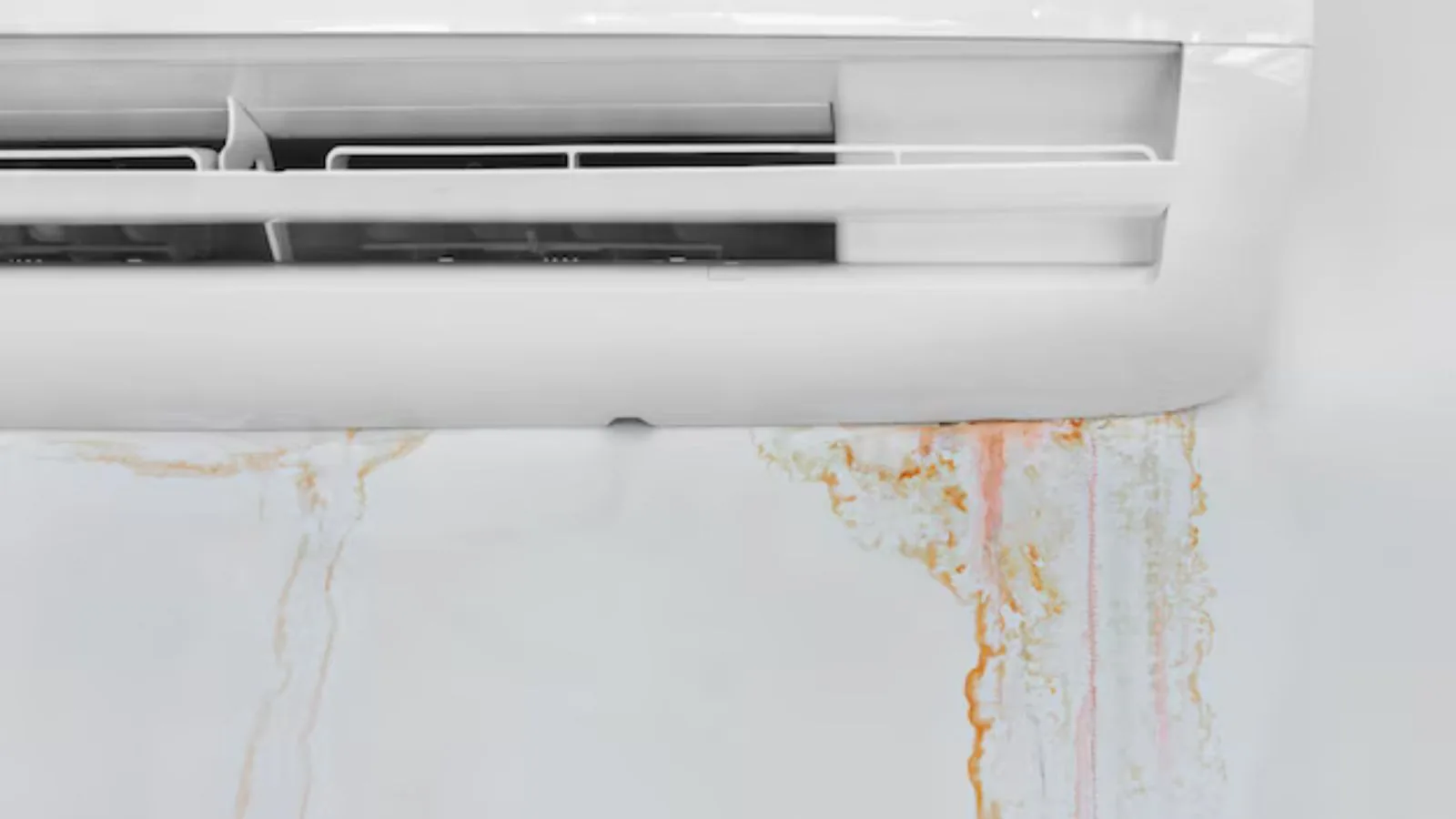
AC leak water damage happens when condensate from an air conditioner or air handler escapes its drain and wets the space around it. In a humid coastal town such as Asbury Park, units run hard in summer and produce a lot of condensate. When the drain clogs or the pan overflows, the water goes into ceilings, closets, attics and walls.
Turn the system off at the thermostat when you see water. A running unit keeps producing condensate. Then call us for the damage and an HVAC technician for the unit. The two jobs are separate and both need to happen.
Where AC water shows up
Air handlers sit in attics, closets and basements, so the first sign is often a ceiling stain below or a puddle in a utility closet. The water is usually clean at first, though condensate pans can hold algae and dirt that make it unpleasant.
A ceiling that sags below an attic unit is a ceiling water damage problem and needs safe relief. Wet insulation in the attic should come out.
| Cause | Sign | Who fixes it. |
|---|---|---|
| Clogged condensate line | Water around the air handler, overflow pan | HVAC technician. |
| Frozen evaporator coil | Ice on the coil, then a flood at thaw | HVAC technician. |
| Cracked or rusted drain pan | Slow drip below the unit | HVAC technician. |
| Poor insulation on ducts | Sweating and drips in the attic | HVAC and insulation contractor. |
How we handle the damage
The crew removes standing water, pulls wet insulation, checks drywall and framing, and sets drying equipment. The method matches the structural drying process, with readings taken until the materials are dry.
Because AC leaks tend to run slowly, drywall may be soft or stained by the time it is noticed. Repair then follows drying.
ANSI/IICRC S500, the published standard for water damage restoration, treats condensate as clean water at first and as Category 2 once it has soaked insulation or sat for days. That is why wet attic insulation is usually removed instead of dried in place.
What to do before help arrives
- Turn the system off at the thermostat so it stops making condensate.
- Keep people out from under any bulging ceiling.
- Do not touch fixtures or switches if water is dripping through them.
- Place a bucket under drips and photograph the stain.
AC leak damaging a ceiling? Call the 24/7 line for drying and repair.
Call (732) 352-9660Humidity matters too. A unit that short cycles or runs with dirty filters can push more moisture into the air handler cabinet. Replace filters on schedule, and keep the area around the unit clear so you can spot a drip early. Check the closet or attic after the first hot week of summer, when condensate output is highest.
Slow leaks and mold risk
Slow condensate leaks keep materials damp for weeks, which can allow mold growth. If you see growth or smell mustiness, read the mold remediation page. Fix the source first, or growth returns.
Annual HVAC service that clears the condensate line prevents most of these leaks. A float switch that shuts the system off when the pan fills is a low cost safeguard.
What moves the price of this job
AC leak repairs are priced on how long the water ran and where it went.
Duration
Weeks of slow dripping do more harm than one overflow.
Location
Attic units wet insulation and ceilings, while closet units wet walls and floors.
Materials
Insulation, drywall and trim each dry or fail differently.
Drying time
Cavities above ceilings can need several days of equipment.
Finish work
Texture and paint matching add to the repair.
Want your real number? Call and the scope and price are explained before work starts.
Insurance and AC leaks
Sudden overflow is often covered for the resulting damage, but long-running leaks and equipment repair often are not. Check your policy and ask your insurer.
Photos of the unit, the pan and the stain help document the loss. We cannot promise any claim outcome.
AC leak questions
Can an AC leak cause mold?
Slow, long-running leaks keep materials damp, and damp materials can support mold. Drying quickly and fixing the source is how that is prevented.
Do you repair the air conditioner?
No. An HVAC technician repairs the unit. We dry and repair what the water damaged.
Is the water from my AC dirty?
It is usually clean at first, but pans can hold algae and debris. Materials that stayed wet for a long time are treated with more care.
My ceiling is sagging under the attic unit. What now?
Turn the system off, keep people out from under the sag and call. Safe water relief comes first.
Will my homeowners policy cover this?
Often for sudden overflow, less often for gradual leaks. Read your policy and ask your insurer.
AC water damage spreading? Call the line and get drying scheduled.
Call (732) 352-9660