

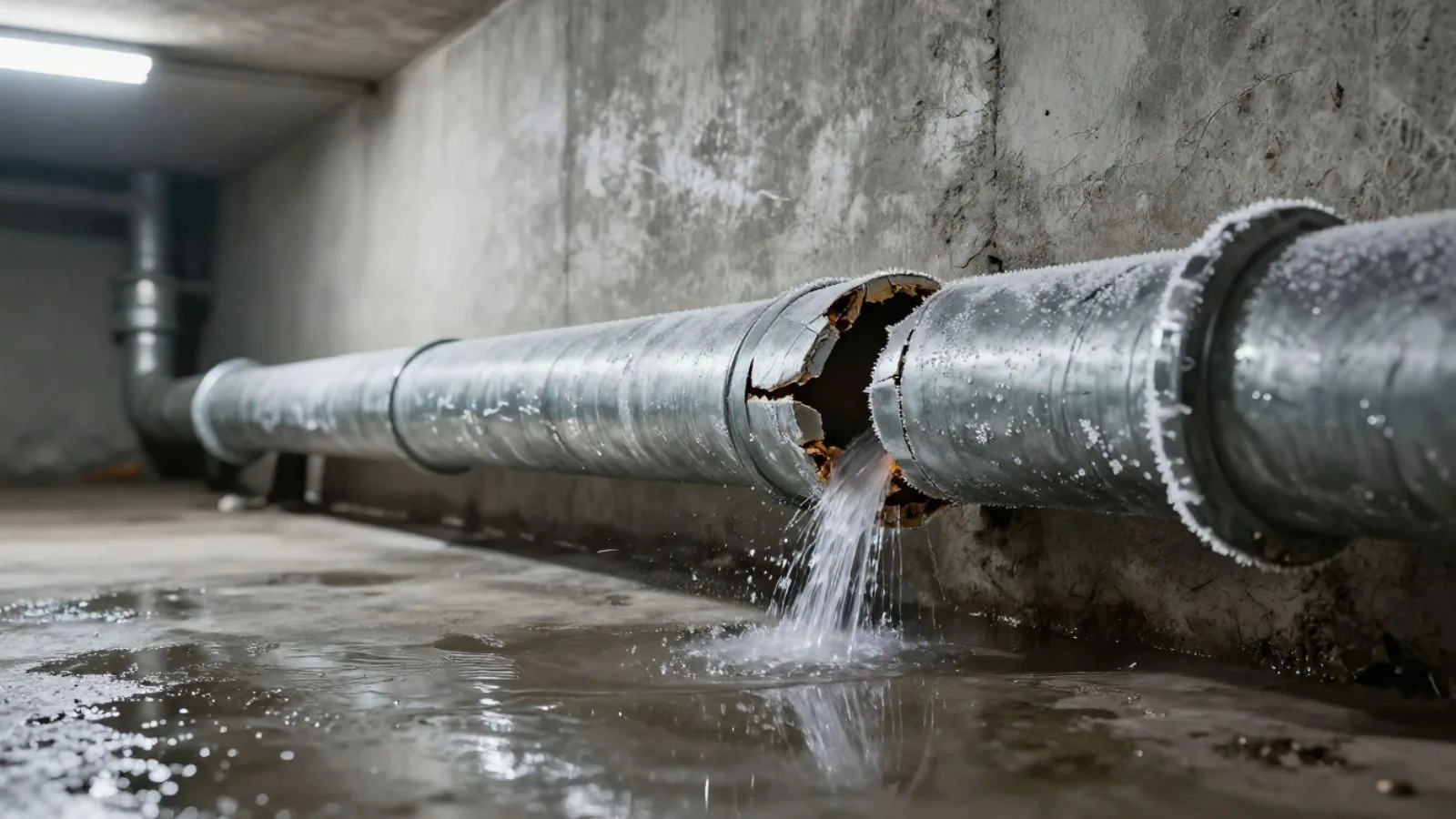
Water damage follows the calendar more than most people expect. Winter cold stresses pipes, spring rain tests roofs and drains, summer humidity feeds mold and fall storms bring wind driven rain. A short check each season catches problems while they are small.
This guide gives you one list per season. It assumes you own or manage a typical house or building. If you rent, share the list with your landlord.
| Season | Main risks | Check. |
|---|---|---|
| Winter | Frozen and split pipes | Insulate exposed lines, know your main valve. |
| Spring | Roof leaks, clogged gutters, wet basements | Clean gutters, test the sump pump. |
| Summer | AC condensate, humidity, mold | Clear drain lines, run a dehumidifier. |
| Fall | Storm rain, leaves in drains | Check roof and flashing, clear drains. |
Winter
Cold snaps are the main trigger for split pipes. Insulate lines in unheated spaces, and open cabinet doors on exterior walls during a hard freeze. Let a faucet drip when a deep freeze is forecast.
If you will be away, ask someone to check the house or shut the water off at the main. A frozen pipe that thaws can flood a house, as the frozen pipe page explains.
Spring
Spring rain exposes weak spots. Walk the outside of the house after a rain and note where water pools. Clear gutters and extend downspouts. Test the sump pump by pouring water into the pit.
Look at the ceiling after the first heavy rain. A new stain tells you where the roof or flashing is letting water in.
What to know in Asbury Park
Asbury Park lies between the Atlantic and three lakes, Deal Lake, Wesley Lake and Sunset Lake, and Hurricane Sandy affected the city in 2012. Seasonal storms and high water are part of living here, so a check each season fits the setting.
For flood questions, check the FEMA flood map for your address and ask the City of Asbury Park building department about drainage. The New Jersey Department of Banking and Insurance states that homeowners policies exclude flood, so review your coverage yearly. Homes in Oakhurst and Neptune have their own local conditions.
Source type: state insurance regulator guidance, federal flood map service and public geographic data.
ANSI/IICRC S500 is the published standard for water damage restoration, and ANSI/IICRC S520 covers mold. Both make the same point your seasonal checks make: catch water early and dry it quickly.
Found a leak this season? Call the 24/7 emergency line.
Call (732) 352-9660Summer
Air conditioners produce condensate, and a clogged drain line can leak into ceilings and closets. Clean the line and replace filters. A float switch is a low cost safeguard.
Humidity rises in summer, and damp basements and crawl spaces can grow mold. Run a dehumidifier and look for condensation on pipes and ducts. The mold remediation page explains what to do if growth appears.
Fall
Fall storms bring wind driven rain. Clear leaves from gutters and drains and check roof flashing. Trim branches that hang over the roof.
Before heating season starts, check your water heater for leaks and rust. Replace old washing machine hoses. If you find water damage, the structural drying process is the way to stop it spreading.
A walkthrough that takes thirty minutes
Start in the basement or lowest level. Look at the floor and wall bases for stains and damp spots. Smell the air. Check the water heater, the sump and the main valve. Move to the kitchen and baths and look under sinks. Check the washer hoses and the dishwasher connection.
Go upstairs and look at ceilings, especially under baths and roofs. Check windows for staining on the sills. Finish outside, looking at gutters, downspouts, grading and the roof from the ground. Take photos of anything that looks new, so you can compare next season.
Use a small notebook or a note on your phone. Record the date, what you checked and what you fixed. Over a few years the log becomes a record of maintenance that helps with insurance and sale.
When to call for help
Call a plumber for leaks inside walls or under floors. Call a roofer for roof problems. Call a restoration company when water has already damaged materials. The sooner a wet area is dried, the more of it survives, as the water extraction page explains.
Older homes and special cases
Older houses have older plumbing, and galvanized or aged copper lines can fail with little warning. If your home has original pipes, ask a plumber to inspect them and tell you what remains in good shape. Replace the weakest runs on your schedule, not in an emergency.
Buildings with flat roofs need extra attention in spring and fall, because ponded water finds seams. Detached garages and sheds with plumbing deserve the same checks as the house.
Make it a habit
Put four dates on your calendar, one at the start of each season. Spend thirty minutes each time. Keep a log of what you checked and fixed. A log helps with insurance, and with the sale of the house later.
If you find an active leak, shut off the water and call for help right away. Early action is the cheapest repair there is.
Questions homeowners ask
How often should I check for water damage risks?
Once each season is a good habit. A short walk through takes about half an hour.
Which season has the most water damage?
It depends on the cause. Winter brings frozen pipes, spring brings roof and basement water and fall brings storms.
Do Asbury Park lakes affect flood risk?
Deal Lake, Wesley Lake and Sunset Lake are part of the local water system. Risk varies by street, so check the FEMA flood map for your address.
Found water damage this season? Call the 24/7 line and get help.
Call (732) 352-9660