

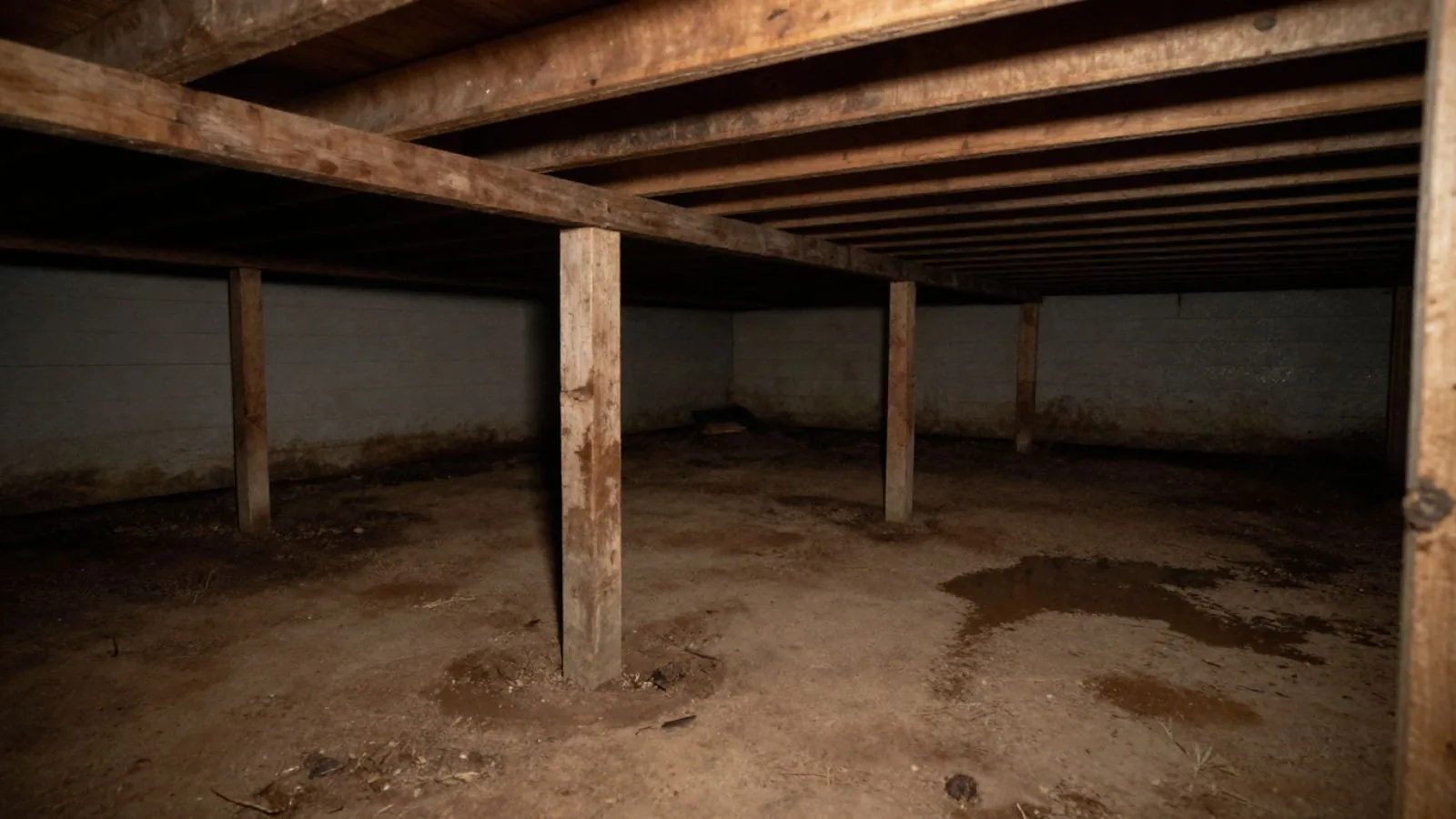
A musty smell after water damage usually means something is still damp. Air fresheners and deodorizers cover odors but leave the cause in place. The lasting fix is to find the wet material, dry or remove it and only then address the smell.
This guide walks through where odors hide, how to find them and when to call for help. We make no health claims, and anyone with symptoms should talk with a physician.
Where the smell comes from
| Place | Why it holds odor | What to do. |
|---|---|---|
| Carpet pad | Absorbs water and dries slowly | Replace the pad, dry the subfloor. |
| Wall cavities | Insulation and drywall stay wet | Open, dry or replace. |
| Under cabinets and sinks | Slow leaks and poor airflow | Fix the leak, dry the base. |
| Basements and crawl spaces | Cool, damp air | Dehumidify, repair drainage. |
| HVAC ducts and drain pans | Condensation and standing water | Clean the pan and line. |
Find the moisture
Follow your nose, then use tools. A moisture meter finds wet drywall and wood. A thermal camera can reveal cool, damp patches behind surfaces. Check the area where water was cleaned up, because wet materials often stay wet under a dry looking surface.
Look for stains, peeling paint, warped baseboards and soft spots. Pull furniture away from walls and look behind it.
Dry first, deodorize last
The structural drying process removes the moisture that feeds the smell. Air movers and dehumidifiers work together, and readings tell you when materials are dry. Materials that cannot dry, such as soaked pad or insulation, are removed.
Once dry, odors fade on their own or can be addressed with cleaning. If you deodorize before drying, the smell returns.
What to know in Asbury Park
Asbury Park sits between the Atlantic and Deal Lake, Wesley Lake and Sunset Lake, so open water sits on several sides of the city. Humid air slows drying wherever it is present, and lingering dampness lets musty odors stay. A dehumidifier and good airflow help.
The New Jersey Department of Health publishes mold guidelines for homes and is a neutral reference. Homes in Bradley Beach and Belmar share the coastal humidity.
Source type: state health department guidance and public geographic data.
Smell not going away? Call the line and ask about a moisture check.
Call (732) 352-9660When a smell means mold
A musty smell often signals mold growth somewhere damp. You may not see it, because it can grow behind walls and under flooring. If you smell mustiness after a leak, schedule an inspection.
The mold remediation page explains inspection, removal and clearance. Fix the water source first or the smell returns.
What does not work
Sprays, plug in fresheners and scented candles hide odor without solving the cause. Bleach on porous materials does not remove deep growth. Painting over a stain seals moisture into the wall.
Running a fan on a wet carpet pad can make the surface feel dry while the pad stays wet. A moisture meter, not your nose or your hand, tells you when something is dry.
Cleaning what can be saved
Hard surfaces and sealed wood can be washed with detergent and water and dried quickly. Fabrics may be laundered if they were not exposed to contaminated water. Upholstered items are harder, and a soaked mattress or sofa often cannot be saved.
Open windows on dry days, run fans in a way that moves air across surfaces and keep the dehumidifier going until the room reads normal.
If the smell persists after drying, an inspection can find what remains. Do not keep covering the smell. Call and ask for a moisture check.
How long should a smell take to clear?
After materials are dry, a lingering smell usually fades within days as the air exchanges and surfaces are cleaned. If the smell is still strong after a week of normal ventilation, something is probably still damp. Check closets, the backs of cabinets and the underside of flooring.
Keep a simple log. Write down where the smell is strongest, at what time of day and in what weather. Patterns help an inspector locate a hidden source faster.
Do not wait for the smell to become unbearable. The earlier you act, the smaller the repair. A wet area caught within a day or two is usually a drying job, not a rebuilding job.
Basements deserve a special check. Lower levels stay cooler and hold moisture, and stored boxes and fabrics absorb odor. Move belongings off the floor, run a dehumidifier and look at the base of walls for staining. If you find standing water, treat it as a basement flooding problem, not a smell problem.
Last, remember that smell is subjective. If you are unsure, ask someone who has not been in the space to walk in and tell you what they notice. Fresh noses catch what a resident has stopped smelling.
Prevention at home
- Run bath and kitchen fans.
- Keep indoor humidity moderate with a dehumidifier in damp areas.
- Fix leaks as soon as you notice them.
- Keep air moving behind furniture on exterior walls.
- Dry wet items within a day.
These habits are cheap. They also stop most smells before they start.
Questions homeowners ask
Why does my house smell musty after a leak?
Materials are probably still damp. Find the wet area and dry it. Deodorizing alone will not last.
Will a dehumidifier fix the smell?
It helps by lowering humidity, but wet materials may need drying equipment or removal.
Does Asbury Park's coastal humidity make smells worse?
High humidity slows drying, so a damp area takes longer to clear. Dehumidifiers and airflow help.
Still musty? Call the line and ask about a moisture check.
Call (732) 352-9660