

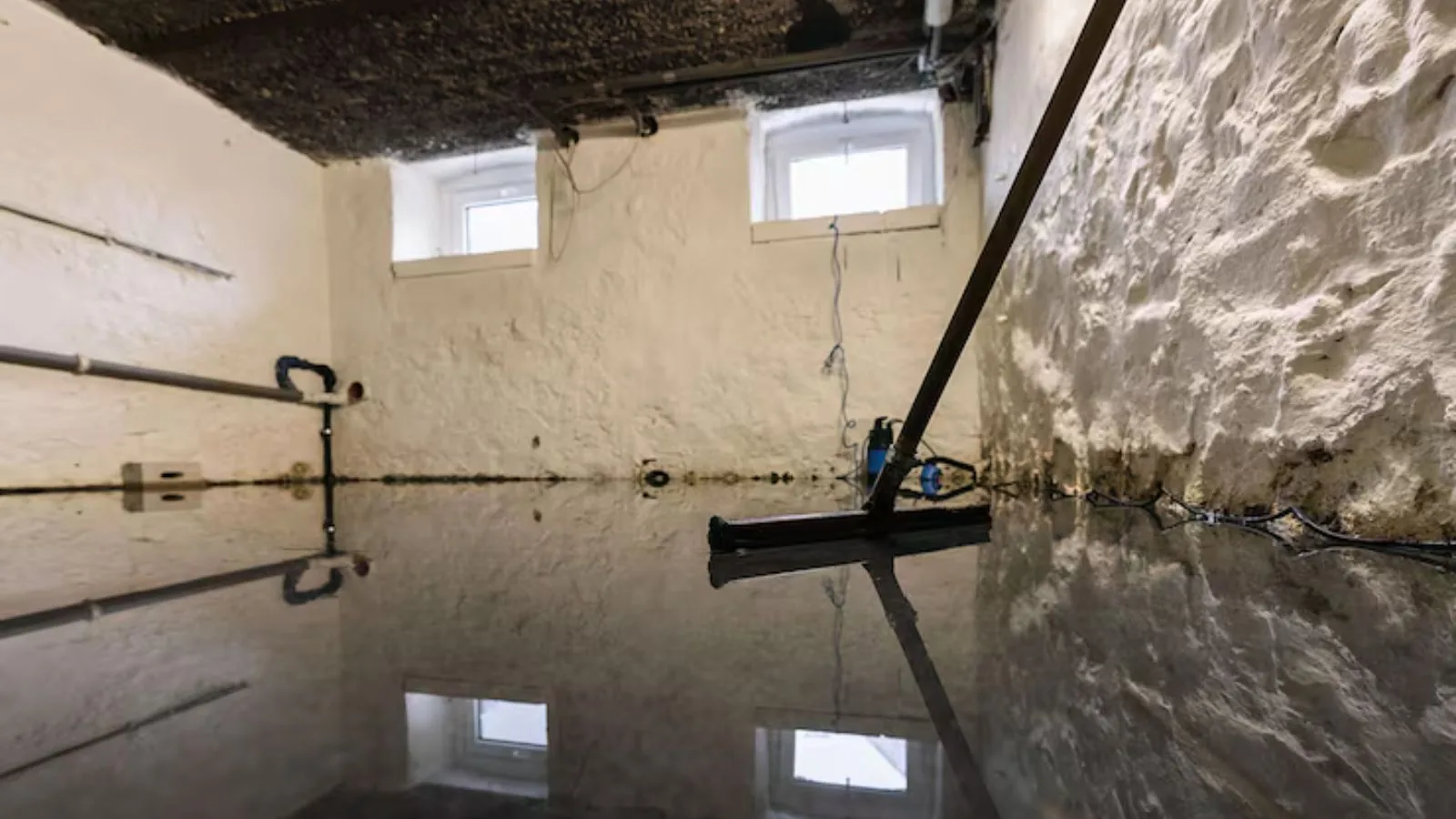
Most homeowners policies cover water damage that is sudden and accidental, and most exclude damage from flood, ground water and long neglect. That one sentence explains the majority of claim surprises. A pipe that bursts on Tuesday is a different loss from a basement that seeps for a season, and a policy treats them differently.
This guide explains the usual lines between covered and not covered, so you can read your own policy with the right questions. We are a restoration company, not an insurer or a lawyer. Your policy wording and your insurer decide what applies to you.
Sudden and accidental versus gradual
Policies usually distinguish between water that arrives suddenly and water that arrives slowly. A supply line that splits, a water heater tank that fails or a dishwasher hose that bursts is sudden. A pinhole leak that wets a wall for months, a chronic drip under a sink or seepage through a foundation is gradual.
Sudden losses are the ones insurers most often pay for, subject to your deductible. Gradual losses are often excluded as maintenance issues. The line can blur, so keep any evidence of when the problem started.
| Water source | Usually covered? | What to check. |
|---|---|---|
| Burst supply line | Often yes, for the resulting damage | Whether the pipe repair itself is covered. |
| Appliance hose or tank failure | Often yes | Appliance age and maintenance wording. |
| Roof damaged by a storm | Often yes, for rain that enters | Wind and hail terms and deductibles. |
| Flood or storm surge | Usually no | A separate flood policy. |
| Sewer or drain backup | Often excluded | A water backup endorsement. |
| Slow seepage or long term leak | Often excluded | Gradual damage exclusions. |
Flood is the big exception
Flood coverage is the exclusion that catches people most often. Standard homeowners policies leave it out. If water rises from the ground or the street and enters the house, a homeowners policy generally will not pay, and a separate flood policy is the answer.
Storm surge counts as flood for this purpose. That matters on the coast, where a wind and rain claim and a surge claim can come from the same storm. Ask your agent how your policy treats each.
What to know in Asbury Park
The New Jersey Department of Banking and Insurance states that homeowners policies exclude flood damage, that only flood insurance covers it, and that storm surge counts as flood. Hurricane Sandy affected Asbury Park in 2012, so the question is not hypothetical here.
To see how your address is mapped, check the FEMA flood map for it. For drainage and local building questions, ask the City of Asbury Park building department. Neighbors in Neptune and Belmar face the same insurance rules, with different street level exposure.
Source type: state insurance regulator guidance and federal flood map service.
Reading the fine print
Three phrases decide most water claims: sudden and accidental, continuous or repeated seepage, and surface water. Find them in your policy and read the sentences around them. They tell you where your insurer will draw lines.
Also look for limits. Some policies cap the amount for mold, for water backup or for certain contents. A cap you did not notice can change your out of pocket cost after a covered loss. Ask your agent to point to each limit on your declarations page.
Maintenance matters too. Policies often exclude damage that results from a lack of maintenance, such as a hose that was visibly cracked for years. Replacing washing machine hoses, checking under sinks and servicing the water heater are small steps that keep a claim from being questioned later. Keep receipts for that work, because they show you took care of the property.
Add-ons that change the picture
- A water backup endorsement can cover sump pump failure and sewer backup that the base policy excludes.
- A separate flood policy covers rising water and is bought through the national program or a private insurer.
- Replacement cost coverage affects whether the payout covers new materials or depreciated value.
- Your deductible applies to each loss, so a small repair may fall under it.
Review these every year. Many homeowners learn what they lack only after a loss, when it is too late to add coverage.
What to do when water hits
Stop the source, protect your property from more damage and photograph everything. Insurers expect you to take reasonable steps, which includes calling for water extraction and drying soon. Keep receipts for emergency services.
Report the loss promptly. Ask what the insurer needs and keep a log of every call. Nobody can promise a claim result, and a restoration company cannot approve a claim. What we provide is moisture readings, photos and an itemized scope that your adjuster can review.
Water in the house now? Call the 24/7 line and start the documentation while you wait on your insurer.
Call (732) 352-9660Questions to put to your agent
- Does my policy cover sudden pipe breaks, and does it cover the pipe itself?
- Do I have water backup coverage for sump and sewer failures?
- Is flood excluded, and should I buy a separate policy for my address?
- How does my deductible apply to a storm claim?
- What documentation do you need after a loss?
Write the answers down and keep them with your policy. The cost of one phone call is small next to the cost of finding a gap after a loss. For help with a mold follow up after a covered loss, see the mold remediation page.
Questions homeowners ask
Does homeowners insurance cover a burst pipe?
Often yes, for the resulting water damage, though the repair of the pipe itself may not be covered. Your policy and deductible decide the outcome, so ask your insurer.
Does homeowners insurance cover flood in Asbury Park?
No, standard homeowners policies exclude flood, according to the New Jersey Department of Banking and Insurance. Only flood insurance covers it. Check the FEMA flood map for your address and ask your agent.
Will my insurer pay for mold after water damage?
It depends. Mold that follows a covered loss is sometimes covered, and mold from neglect often is not. Read the mold wording in your policy.
Need help documenting a loss? Call the 24/7 line and ask for the scope in writing.
Call (732) 352-9660